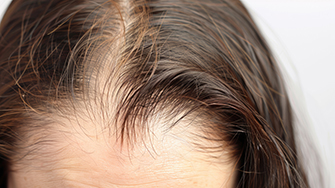
Three Causes of Female Hair Loss
Why Am I Losing My Hair?
While female hair loss is quite common, that doesn’t make it any less jarring when you’re in the shower or brushing your hair and clumps end up in your hand. Your hairline is changing, your hair is becoming thinner, and you’re longing for the days when you could throw your hair up in a ponytail without worrying about bald spots. Sound familiar? Keep reading to learn about the three main causes of female hair loss, including an investigational, non-hormonal treatment through our Female Hair Loss Clinical Trial.
Three Causes of Female Hair Loss
According to UCLA Health, sudden and dramatic hair loss can happen because of taking specific medications (such as those used during chemotherapy). In some cases, rapid hair loss can occur during a period of high stress or trauma to the body.
That type of hair loss is called telogen effluvium because hair in the anagen (or growing) phase switches to the telogen (resting) phase. Fewer new strands grow, and more begin to fall out — up to 300 per day.
Main causes of hair loss include:
- Childbirth and postpartum hormone fluctuation
- Nutrition deficiencies, either iron, vitamin D, or caused by crash diets
- Certain medical conditions, such as thyroid disease or mental health issues
The most common type of hair loss in women is a condition called female pattern hair loss (FPHL), also known as androgenetic alopecia. It affects up to 30 million women in the U.S. — most of them in their 40s, 50s or 60s.
Just like male pattern baldness, FPHL is an inherited condition. If your mother or father suffered from hair loss, you may inherit the genes that cause it.
Treatment for Female Hair Loss
There are many effective treatments for female hair loss, and finding the right one takes some trial-and-error. Some treatments include topical lotions or oils, prescription oral medications, and hormone therapy.
For many people, topical medications can be uncomfortable. They are often itchy and require precise consistency, which can be difficult to maintain. Many people’s skin may not react positively, including rashes.
Hormonal therapy is a common treatment; however, this can cause difficult side effects for many women. This can include weight gain, anxiety, depression, and more.
If you are looking for an easy, non-hormonal treatment for your hair loss, Cahaba Clinical Trials is looking for you.
Female Hair Loss Clinical Trial
Cahaba Clinical Trials is conducting a new clinical trial in Birmingham for the non-hormonal treatment of a genetic disorder, also known as androgenetic alopecia (AGA) – the most common form of hair loss in the world.
There are currently no FDA-approved treatments like this available, and the call for better options is large.
To see if you qualify for our hair growth clinical trial and up to $1200 for time and travel, click here to provide us with your contact information. We will call you to conduct the pre-qualification call and invite you to our facility for an in-person appointment to confirm that you meet our study guidelines.
For more information, visit us at CahabaClinicalTrials.com!