No Insurance or Proof of Residency is Required for Dermatology Clinical Trials in Birmingham
Living with a persistent skin condition can be frustrating. When symptoms flare, the last thing you want to worry about is whether you have the right insurance coverage or paperwork to explore your options.
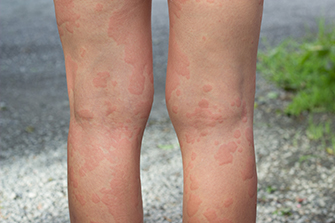
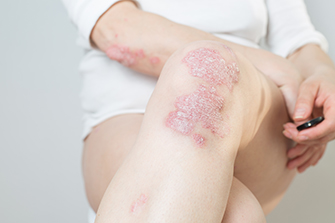
At Cahaba Clinical Research in Birmingham, we don’t require insurance or proof of residency to consider you for dermatology clinical trials. If you are living with eczema, psoriasis, acne, hidradenitis suppurativa, vitiligo, or another skin condition, participating in clinical research may give you an opportunity to contribute to the development of future treatment options.
Here is what you can expect.
Why Consider a Dermatology Clinical Trial?
Clinical trials evaluate investigational therapies to learn more about their safety and effectiveness. They are research studies, not standard medical care, and each trial follows a specific protocol that determines who may participate, what procedures are involved, and how participants are monitored.
At Cahaba Clinical Research:
- No insurance is required for study-related procedures.
- No proof of residency is required to be evaluated for participation.
- Study-related care is provided at no cost to participants.
- Many studies offer reimbursement for time and travel.
- Experienced dermatology research professionals support participants throughout the study.
Eligibility is based on the requirements of the individual study and medical considerations related to participant safety.
What Skin Conditions Are Studied?
 Dermatology clinical trials may evaluate investigational options for conditions including:
- Psoriasis
- Eczema or atopic dermatitis
- Acne
- Hidradenitis suppurativa
- Vitiligo
- Other inflammatory or pigment-related skin conditions
Available studies change over time, and every clinical trial has its own eligibility requirements. A short pre-screening conversation with the research team can help determine whether a current study may be appropriate for you.
How Enrollment Works
Step 1: Explore Current Studies
Visit Cahaba Clinical Research’s website or contact the Birmingham research site to learn which dermatology studies are currently enrolling. The team can help identify studies that may relate to your condition.
Step 2: Submit Your Information
You may be asked to complete an online interest form or speak with the site by phone. Typically, you will provide basic contact information and some information about your skin condition. You do not need to provide insurance information or proof of residency simply to begin the screening process.
Step 3: Complete a Pre-Screening
A research coordinator may ask about:
- Your diagnosis
- Current medications
- Previous treatments
- Allergies
- Medical history
- Your current symptoms
This conversation helps the research team determine whether you may meet the basic eligibility requirements for a particular study. You can also ask about the expected study duration, number of visits, procedures, and reimbursement for time and travel.
Step 4: Attend a Screening Visit
 If you appear to meet the initial requirements, you may be invited to the Birmingham research site for a screening visit. Before any study-related procedures begin, the research team will review an informed consent document with you. This document explains the study, including its purpose, procedures, potential risks and benefits, your responsibilities, and your rights as a participant.
Take your time and ask questions. Participation is always your choice.
Depending on the study, screening may include:
- A physical examination
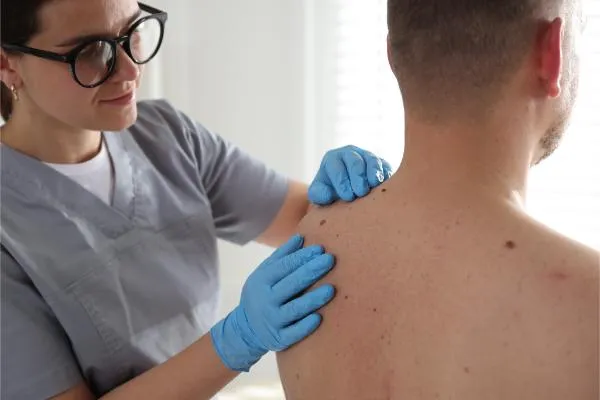
- Evaluation of affected skin
- Photographs
- Laboratory testing
- Questionnaires
- Review of medications and medical history
Study-related screening procedures are provided at no cost to you.
Step 5: Enrollment
Completing screening does not automatically mean you will qualify. If you meet the study’s eligibility requirements and decide to participate, the research team will explain what happens next. Depending on the protocol, participants may receive an investigational product, comparator, or placebo.
You will also receive information about:
- Your visit schedule
- At-home diaries or apps, if required
- Study procedures
- Who to contact with questions
- Reimbursement for time and travel
Step 6: Attend Follow-Up Visits
During the study, you will return for scheduled visits so the research team can monitor your health and collect study information. It is important to tell the study team about any symptoms or side effects you experience. Participation remains voluntary throughout the study. You may choose to withdraw at any time without penalty.
No Insurance? You Can Still Explore Your Options
 One of the most common misconceptions about clinical research is that health insurance is required. At Cahaba Clinical Research, insurance is not required to be evaluated for participation in a dermatology clinical trial. Study sponsors typically cover procedures required by the research protocol, meaning there is no insurance billing for those study-related activities. Likewise, proof of residency is not required to determine whether you may qualify. Eligibility is based on the study’s IRB-approved requirements and the research team’s medical judgment.
How Participant Safety Is Protected
Clinical research operates within a structured system of safeguards designed to protect participants and maintain scientific integrity. Depending on the study, these protections include:
IRB Oversight
An Institutional Review Board reviews research protocols with a focus on participant rights, safety, and ethical conduct.
Medical Oversight
Clinical assessments and safety decisions are overseen by qualified research professionals and the study’s principal investigator.
Side Effect Monitoring
Research protocols establish procedures for identifying, documenting, and managing potential adverse events.
Informed Consent
You receive information about the study before deciding whether to participate and have the opportunity to ask questions.
Voluntary Participation
You are free to decide whether to participate and may withdraw from a study at any time.
Your Privacy
Your personal and medical information is handled according to applicable research and privacy requirements. Before participating, you will receive information explaining how your data may be collected, stored, and used.
If clinical photography is required as part of a dermatology study, the research team will explain how those images will be handled before photographs are taken.
What Should You Bring to Your First Visit?
 If you are invited for screening, it can help to bring:
- A list of current medications and doses
- Over-the-counter medications and topical products you use
- Information about previous dermatology treatments
- Previous diagnoses or biopsy results, if available
- Questions you want to ask the study team
The research staff will let you know if any additional information is needed.
Who Qualifies for a Dermatology Clinical Trial?
Every study is different. Eligibility criteria may include factors such as:
- Age
- Type of skin condition
- Severity of symptoms
- Location of affected skin
- Previous treatments
- Current medications
- Other medical conditions
Some medications may also require a temporary washout period before participation. Never stop or change a medication on your own to qualify for a study. The research team will explain any study-specific medication requirements.
Is a Clinical Trial Right for You?
Before deciding to participate, consider both the medical and practical aspects of the study.
Ask questions such as:
- How many visits will I need to attend?
- How long does the study last?
- What procedures are involved?
- What are the potential risks?
- Is there a possibility I will receive a placebo?
- What happens if I experience side effects?
- What happens if I miss an appointment?
- Is reimbursement provided for time and travel?
Investigational therapies are not guaranteed to provide a personal medical benefit. Clinical trial participation is primarily intended to help researchers learn more about potential treatments. Understanding what participation involves can help you make an informed decision.
Why Cahaba Clinical Research?
 Cahaba Clinical Research’s Birmingham site focuses on dermatology research and the evaluation of investigational options for a variety of skin conditions. The dermatology research program is led by Dr. Vlada Groysman, a board-certified dermatologist with more than 20 years of clinical experience.
Participants can expect clear communication, privacy-focused research practices, experienced staff, and detailed information about what each study requires.
Most importantly, you can explore potential participation without insurance or proof of residency.
Ready to Learn More?
Getting started can be simple:
- Review current dermatology studies.
- Contact Cahaba Clinical Research.
- Complete a brief pre-screening.
- Ask about study visits, eligibility, and reimbursement for time and travel.
- If you appear eligible, schedule your screening visit.
You are not obligated to participate just because you complete a pre-screening. The research team will provide information so you can decide whether participation is right for you.
Frequently Asked Questions
Do I need insurance to participate?
No. Cahaba Clinical Research does not require insurance for participation. Study sponsors typically cover procedures required by the research protocol.
Do I need proof of residency?
No. Eligibility is based on the requirements of the individual study and safety considerations rather than residency documentation.
Will I be paid for participating?
Many studies provide reimbursement for your time and travel. Amounts and payment schedules vary by study and will be explained by the research team.
What is informed consent?
Informed consent is the process of learning about the study before deciding whether to participate. It covers study procedures, potential risks and benefits, your responsibilities, and your rights.
How long does a clinical trial last?
It depends on the study. Some studies require relatively short participation, while others include follow-up over a longer period. The research team will explain the schedule before you enroll.
Can I leave a clinical trial after enrolling?
Yes. Clinical research participation is voluntary, and you may withdraw at any time without penalty.
Will I definitely receive the investigational treatment?
Not necessarily. Depending on the study design, participants may be assigned to receive an investigational product, comparator, or placebo.
What if I take other medications?
Tell the research team about all medications and supplements you use. Certain medications may not be permitted during a particular study or may require a washout period.
Is my information kept private?
The research site follows applicable privacy requirements and IRB-approved procedures for handling participant information. The informed consent process explains how your information will be collected and used.
Take the First Step
If you are living with a skin condition in Birmingham, lack of insurance does not have to prevent you from exploring clinical research. Cahaba Clinical Research can help you learn whether a current dermatology study may be an option.
No insurance required. No proof of residency required. Study-related care at no cost.
Contact Cahaba Clinical Research to learn about currently enrolling dermatology clinical trials and take the next step toward becoming a research volunteer. This version also removes the hypothetical “Maya” section, which I think makes the article stronger; it was long and added little information beyond what the enrollment section already explained. The original supports the six-step enrollment process and the voluntary nature of participation.